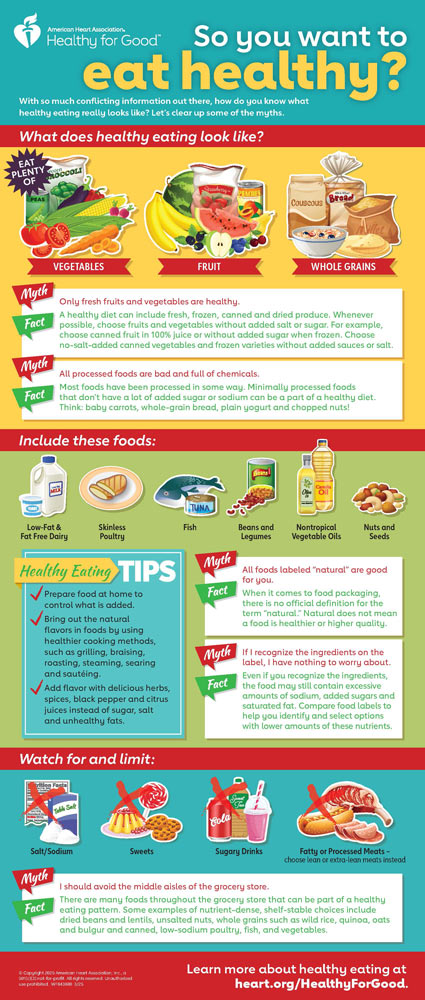
With so much conflicting information out there, how do you know what healthy eating really looks like? Let’s clear up some of the myths.
What does healthy eating look like?
Eat plenty of:
- Vegetables
- Fruits
- Whole grains
Myth: Only fresh fruits and vegetables are healthy.
Fact: A healthy diet can include fresh, frozen, canned and dried produce. Whenever possible, choose fruits and vegetables without added salt or sugar. For example, choose canned fruit in 100% juice or without added sugar when frozen. Choose no-salt-added canned vegetables and frozen varieties without added sauces or salt.
Myth: All processed foods are bad and full of chemicals.
Fact: Most foods have been processed in some way. Minimally processed foods that don’t have a lot of added sugar or sodium can be a part of a healthy diet. Think: baby carrots, whole-grain bread, plain yogurt and chopped nuts!
Include these foods:
- Low-fat and fat-free dairy
- Skinless poultry
- Fish
- Beans and legumes
- Nontropical vegetable oils
- Nuts and seeds
Healthy Eating Tips:
- Prepare food at home to control what is added.
- Bring out the natural flavors in foods by using healthier cooking methods, such as grilling, braising, roasting, steaming, searing and sautéing.
- Add flavor with delicious herbs, spices, black pepper and citrus juices instead of sugar, salt and unhealthy fats.
Myth: All foods labeled “natural” are good for you.
Fact: When it comes to food packaging, there is no official definition for the term “natural.” Natural does not mean a food is healthier or higher quality.
Myth: If I recognize the ingredients on the label, I have nothing to worry about.
Fact: Even if you recognize the ingredients, the food may still contain excessive amounts of sodium, added sugars and saturated fat. Compare food labels to help you identify and select options with lower amounts of these nutrients.
Watch for and limit:
- Salt/sodium
- Sweets
- Sugary drinks
- Fatty or processed meats – choose lean or extra-lean meats instead
Myth: I should avoid the middle aisles of the grocery store.
Fact: There are many foods throughout the grocery store that can be part of a healthy eating pattern. Some examples of nutrient-dense, shelf-stable choices include dried beans and lentils, unsalted nuts, whole grains such as wild rice, quinoa, oats and bulgur and canned, low-sodium poultry, fish, and vegetables.
WATCH THE FULL VIDEO
Video is ready to play. If one link doesn't work, try another available link below 👇