Sugars in your diet can be naturally occurring or added. Naturally occurring sugars are found naturally in foods, such as fruit (fructose and glucose) and milk (lactose). Added sugars are sugars and syrups put in foods during preparation or processing, or at the table.
Why should I pay attention to added sugars?
Many people consume more sugar than they realize. Our bodies don’t need sugar to function properly. Added sugars contribute zero nutritional benefit but often many added calories that can lead to overweight or obesity.
If you think of your daily calorie needs as a budget, you want to spend most of your calories on essentials to meet your nutritional needs. Use only leftover discretionary calories for extras that provide little or no nutritional benefit, such as foods or beverages that contain added sugar.
How much added sugar is OK?
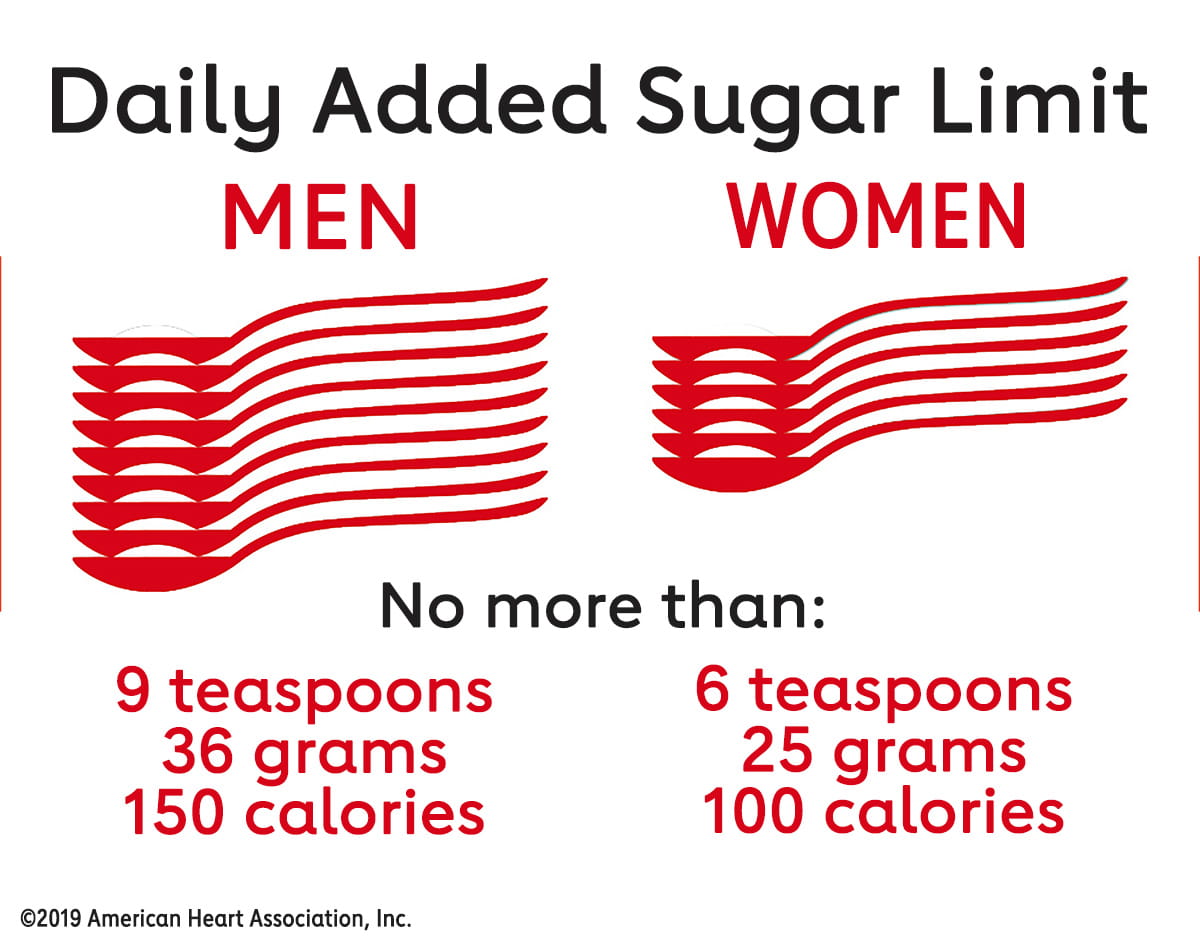
The American Heart Association recommends limiting added sugars to no more than 6% of calories each day. For most American women, that’s no more than 100 calories per day, or about 6 teaspoons of sugar. For men, it’s no more than 150 calories per day, or about 9 teaspoons. The American Heart Association recommendations focusing on all added sugars without singling out a type such as high fructose corn syrup.
What foods and drinks have added sugars?
Common sources of added sugars are:
- Regular soft drinks
- Sweetened tea and coffee
- Energy drinks
- Fruit drinks
- Candy
- Ice cream
- Sweetened yogurts
- Flavored and/or sweetened milk
- Breakfast cereals and bars
How can I identify added sugars?
To determine if a packaged food contains added sugars and how much, read the Nutrition Facts panel. Look for “Added Sugars” under “Total Sugars.” There are four calories in one gram. So, if a product has 15 grams of sugar per serving, that’s 60 calories from the sugar, not counting the other ingredients.
WATCH THE FULL VIDEO
Video is ready to play. If one link doesn't work, try another available link below 👇