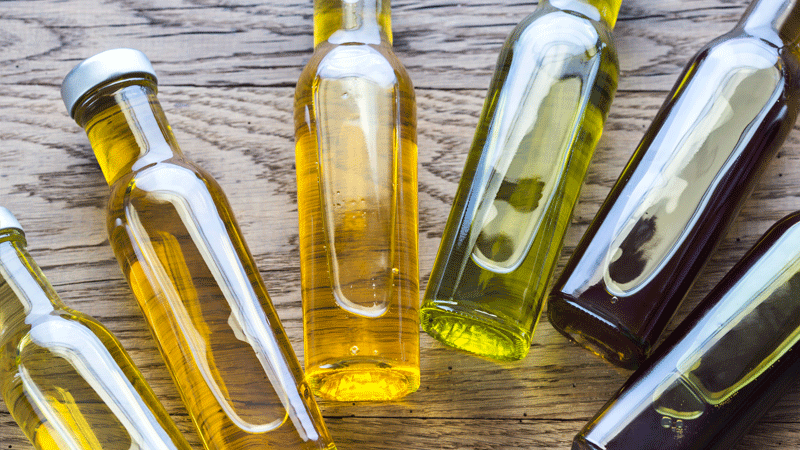
Replacing “bad” fats (saturated and trans) with “good” fats (monounsaturated and polyunsaturated) is smart for your heart.
An easy way to do this is to choose nontropical vegetable oils to cook and prepare food. These types of oils are healthier choices than solid fats, which include butter, shortening, lard and stick margarine, and tropical oils, which include palm and coconut oil. Both solid fats and tropical oils have more saturated fat than nontropical liquid fats.
When shopping for healthy oils, choose those with less than 4 grams of saturated fat per tablespoon, and no partially hydrogenated oils or trans fats.
Here are some common cooking oils that contain more of the “better-for-you” fats and less saturated fat:
- Canola
- Corn
- Olive
- Peanut
- Safflower
- Soybean
- Sunflower
- Vegetable
Blends or combinations of these oils, often labeled “vegetable oil,” and cooking sprays made from these oils are also good choices. Some specialty oils, including avocado, grapeseed, rice bran and sesame, can be healthy choices but may cost a bit more or be harder to find.
You may find that some oils have distinctive flavors, so try different types to discover which ones you like. Also, some oils are better for certain types of cooking than others, so you may want to have more than one type in your pantry.
Use healthy oils to:
- Make your own salad dressings, marinades, dips and sauces.
- Grill, stir-fry, bake or roast foods.
- Coat pans to keep food from sticking.
- Lightly drizzle on foods for flavor.
- “Season” cast-iron cookware.
- Substitute for butter, stick margarine or solid fats.
Tips for cooking with healthy oils
- Use the oils listed above for all your cooking needs. These oils are generally safe, including at higher temperature. (The American Heart Association does not recommend deep-fat frying as a healthy cooking method.)
- If your oil starts to smoke or catches fire, don’t use it. Oil starts to degrade once it reaches its smoke point.
- If the oil smells bad, don’t use it and throw it out. When an oil is stored too long, it can become oxidized or rancid. It will have a distinct smell.
- Don’t reuse or reheat any cooking oil.
- Buy oil in smaller containers if you don’t use it frequently. This way you will most likely use it before it expires.
- Store in a dark, cool place.
WATCH THE FULL VIDEO
Video is ready to play. If one link doesn't work, try another available link below 👇