What it is
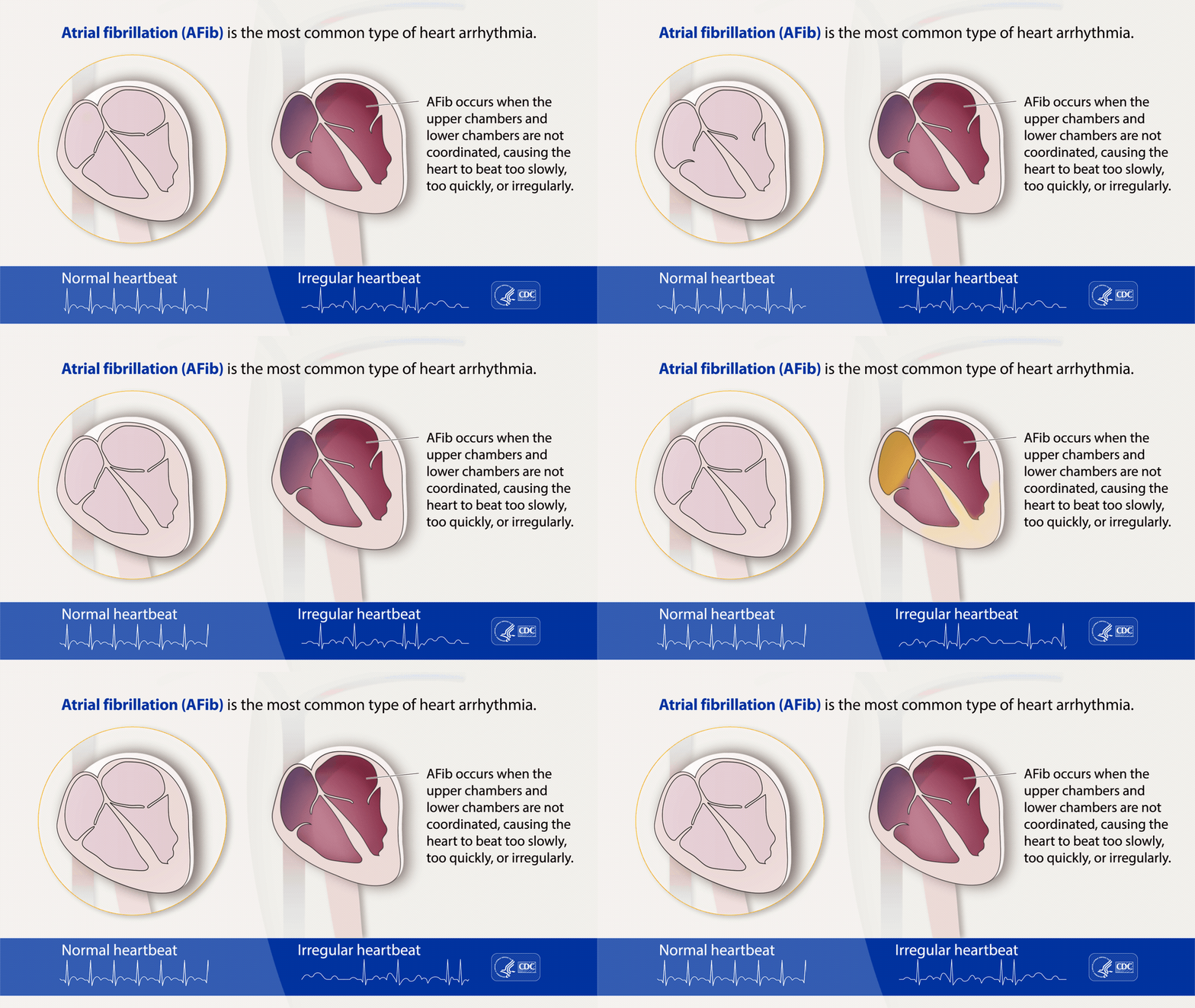
Atrial fibrillation, often called AFib or AF, is the most common type of treated heart arrhythmia. An arrhythmia is when the heart beats too slowly, too fast, or in an irregular way.
When a person has AFib, the normal beating in the upper chambers of the heart (the two atria) is irregular, and blood doesn’t flow as well as it should from the atria to the lower chambers of the heart (the two ventricles). AFib may happen in brief episodes, or it may be a permanent condition.
Facts about AFib
- It is estimated that 12.1 million people in the US will have AFib in the US will have AFib by 2050.12
- In 2021, AFib was mentioned on 232,030 death certificates and was the underlying cause of death in 28,037 of those deaths.3
- People of European descent are more likely to have AFib than Black people.
- Because the number of AFib cases increases with age and women generally live longer than men, more women than men experience AFib.
Symptoms
Some people who have AFib don’t know they have it and don’t have any symptoms. Others may experience one or more of the following symptoms:
- Irregular heartbeat.
- Heart palpitations (rapid, fluttering, or pounding).
- Lightheadedness.
- Extreme fatigue.
- Shortness of breath.
- Chest pain.
Risk factors
The risk for AFib increases with age. High blood pressure, the risk for which also increases with advancing age, accounts for about 1 in 5 cases of AFib.4
Risk factors for AFib include:45
- Advancing age.
- High blood pressure.
- Obesity.
- European ancestry.
- Diabetes.
- Heart failure.
- Ischemic heart disease.
- Hyperthyroidism.
- Chronic kidney disease.
- Moderate to heavy alcohol use.
- Smoking.
- Enlargement of the chambers on the left side of the heart.
How is AFib related to stroke?
AFib increases a person’s risk for stroke. When standard stroke risk factors were accounted for, AFib was associated with an approximately fivefold increased risk of ischemic stroke.6 AFib causes about 1 in 7 strokes.7
Strokes caused by complications from AFib tend to be more severe than strokes with other underlying causes. Strokes happen when blood flow to the brain is blocked by a blood clot or by fatty deposits called plaque in the blood vessel lining.
Treatment and recovery
Treatment for AFib can include:
- Medicines to control the heart’s rhythm and rate.
- Blood-thinning medicine to prevent blood clots from forming and reduce stroke risk.
- Surgery.
- Medicine and healthy lifestyle changes to manage AFib risk factors.
What are the consequences of AFib?
More than 454,000 hospitalizations with AFib as the primary diagnosis happen each year in the US.4 The condition contributes to about 158,000 deaths each year.3 The death rate from AFib as the primary or a contributing cause of death has been rising for more than two decades.
WATCH THE FULL VIDEO
Video is ready to play. If one link doesn't work, try another available link below 👇

