Overview
The term heart disease refers to several types of heart conditions, including coronary heart disease and heart attack.
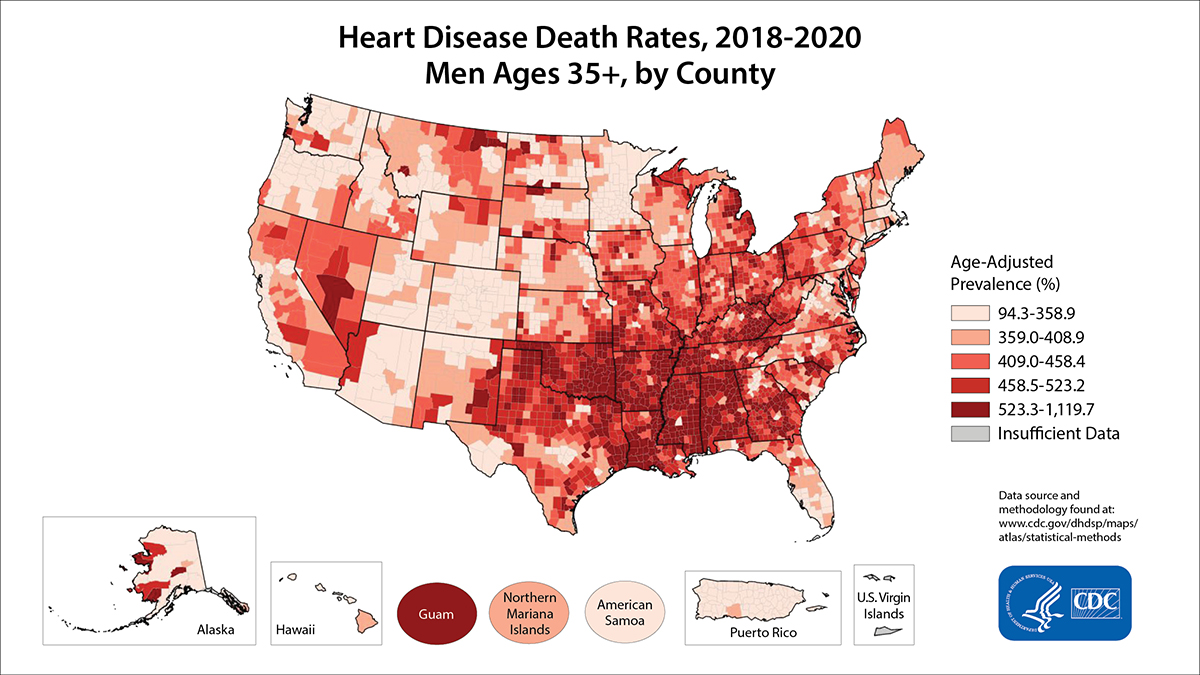
Heart disease is the leading cause of death for men in the United States.1
Symptoms
Sometimes heart disease may be “silent” and not diagnosed until a man experiences signs or symptoms of a heart attack, an arrhythmia, or heart failure.2 Symptoms may include the following:
- Heart attack: Chest pain or discomfort, upper back or neck pain, indigestion, heartburn, nausea or vomiting, extreme fatigue, upper body discomfort, dizziness, and shortness of breath.2
- Arrhythmia: Fluttering feelings in the chest as the heart beats too slowly, too fast, or in an irregular way. A common example is atrial fibrillation.2
- Heart failure: Shortness of breath, fatigue, or swelling of the feet, ankles, legs, abdomen, or neck veins.2
Even if you have no symptoms, you may still be at risk for heart disease.
Risk factors
In 2017-2020, 50.6% of men had high blood pressure, a major risk factor for heart disease and stroke.3
Several other medical conditions and lifestyle choices can also put people at a higher risk for heart disease, including:
- Diabetes
- Overweight and obesity
- Unhealthy diet
- Physical inactivity
- Excessive alcohol use
Reducing risk
To reduce your chances of getting heart disease, it’s important to do the following:4
- Know your blood pressure. Having uncontrolled blood pressure can result in heart disease. High blood pressure has no symptoms so it’s important to have your blood pressure checked regularly. Learn more about high blood pressure.
- Talk to your health care provider about whether you should be tested for diabetes. Having diabetes raises your risk of heart disease.5
- Quit smoking. If you don’t smoke, don’t start. If you do smoke, learn ways to quit.
- Discuss checking your cholesterol and triglyceride levels with your health care provider. Learn more about cholesterol.
- Make healthy food. Having overweight or obesity raises your risk of heart disease. Learn more about overweight and obesity.
- Limit alcohol intake to one drink a day. Learn more about alcohol.
- Lower your stress level and find healthy ways to cope with stress.
WATCH THE FULL VIDEO
Video is ready to play. If one link doesn't work, try another available link below 👇

