How helpful are these plans? Doctors aren’t sure, and research on the link between food and eczema is conflicting.
Diet and Eczema in Adults
There’s no evidence that specific foods cause eczema or make symptoms flare. But some people say their symptoms get worse after they eat a particular food.
Keep in mind that it’s not always easy to figure out exactly what’s making your skin condition flare. The link may seem clear, but because you’re around many triggers every day, it’s often hard to tell if the problem is food, or another trigger, like stress.
Some people with eczema try to completely cut out one or more foods from their diets, like eggs or cow’s milk to see if it helps with their eczema. Anti-inflammatory foods like nuts, grains, and fish – found in diets like the Mediterranean – may help reduce eczema symptoms.
Unless you know you have a specific food allergy, be sure to talk to your doctor before you cut out entire food groups or make other major changes to what you eat.
Food Allergies and Eczema
Food allergies can sometimes cause eczema for young children. But after age 3 or 4, it’s rare. An allergic reaction to things like dairy products, eggs, nuts, soy, or wheat may cause hives or other skin problems that look like eczema, but they’re not the same.
If you think a food allergy is playing a role in your child’s skin disease, talk with their doctor. Ask if testing is likely to help get their condition under control.
Research Into Foods That May Help Eczema
Most of the foods and supplements that scientists have studied haven’t shown much promise for eczema relief, but research is ongoing.
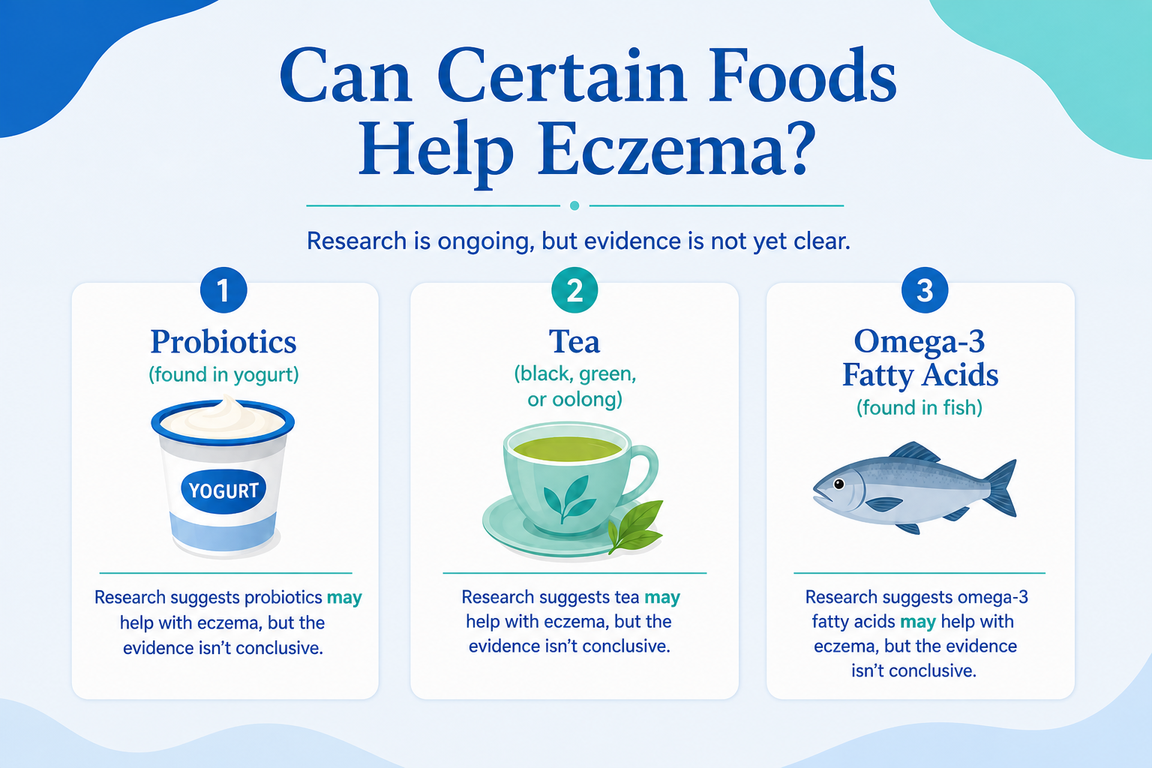
For example, some studies say that probiotics, a type of live bacteria you can get in yogurt or supplements, may help relieve the symptoms of the condition in children. Most of these studies happened in other countries and tested different kinds of probiotics. So it’s not clear what types are most useful.
Scientists are studying tea, as well. Although there’s no clear evidence, a few studies suggest that drinking black, green, or oolong tea may help relieve symptoms. Researchers are also looking at omega-3 fatty acids found in fish and fish oil, which help fight inflammation, as a way to help eczema.
What Should You Do?
Your best bet is to choose a well-balanced eating plan. Despite the uncertain links between food and eczema, there’s no doubt that enjoying plenty of fruits, vegetables, nondairy foods (for example, almond, soy or oat milk), and whole grains is good for your overall health.
WATCH THE FULL VIDEO
Video is ready to play. If one link doesn't work, try another available link below 👇

