Overview
- No tobacco products, including e-cigarettes, are safe.
- Most e-cigarettes contain nicotine, which is highly addictive and is a health danger for pregnant women, developing fetuses, and youth.1
- Aerosol from e-cigarettes can also contain harmful and potentially harmful substances. These include cancer-causing chemicals and tiny particles that can be inhaled deep into lungs.1
- E-cigarettes should not be used by youth, young adults, or women who are pregnant. E-cigarettes may have the potential to benefit adults who smoke and are not pregnant if used as a complete substitute for all smoked tobacco products.234
- Scientists still have a lot to learn about the short- and long-term health effects of using e-cigarettes.
Nicotine
Most e-cigarettes, or vapes, contain nicotine, which has known adverse health effects.1
- Nicotine is highly addictive.1
- Nicotine is toxic to developing fetuses and is a health danger for pregnant women.1
- Acute nicotine exposure can be toxic. Children and adults have been poisoned by swallowing, breathing, or absorbing vaping liquid through their skin or eyes. More than 80% of calls to U.S. poison control centers for e-cigarettes are for children less than 5 years old.5
Nicotine poses unique dangers to youth because their brains are still developing.
- Nicotine can harm brain development which continues until about age 25.1
- Youth can start showing signs of nicotine addiction quickly, sometimes before the start of regular or daily use.1
- Using nicotine during adolescence can harm the parts of the brain that control attention, learning, mood, and impulse control.1
- Adolescents who use nicotine may be at increased risk for future addiction to other drugs.16
- Youth who vape may also be more likely to smoke cigarettes in the future.789101112
Other potential harms of e-cigarettes
E-cigarette aerosol can contain substances that can be harmful or potentially harmful to the body. These include:1
- Nicotine, a highly addictive chemical that can harm adolescent brain development
- Cancer-causing chemicals
- Heavy metals such as nickel, tin, and lead
- Tiny particles that can be inhaled deep into the lungs
- Volatile organic compounds
- Flavorings such as diacetyl, a chemical linked to a serious lung disease. Some flavorings used in e-cigarettes may be safe to eat but not to inhale because the lungs process substances differently than the gut.
E-cigarette aerosol generally contains fewer harmful chemicals than the deadly mix of 7,000 chemicals in smoke from cigarettes.71314 However, this does not make e-cigarettes safe. Scientists are still learning about the immediate and long-term health effects of using e-cigarettes.
Dual use refers to the use of both e-cigarettes and regular cigarettes. Dual use is not an effective way to safeguard health. It may result in greater exposure to toxins and worse respiratory health outcomes than using either product alone.23415
Some people who use e-cigarettes have experienced seizures. Most reports to the Food and Drug Administration (FDA) have involved youth or young adults.1617
E-cigarettes can cause unintended injuries. Defective e-cigarette batteries have caused fires and explosions, some of which have resulted in serious injuries. Most explosions happened when the batteries were being charged.
Anyone can report health or safety issues with tobacco products, including e-cigarettes, through the FDA Safety Reporting Portal.
Health effects of vaping for pregnant women
The use of any tobacco product, including e-cigarettes, is not safe during pregnancy.114 Scientists are still learning about the health effects of vaping on pregnancy and pregnancy outcomes. Here’s what we know now:
- Most e-cigarettes, or vapes, contain nicotine—the addictive substance in cigarettes, cigars, and other tobacco products.18
- Nicotine is a health danger for pregnant women and is toxic to developing fetuses.114
- Nicotine can damage a fetus’s developing brain and lungs.13
- E-cigarette use during pregnancy has been associated with low birth weight and pre-term birth.1920
Nicotine addiction and withdrawal
Nicotine is the main addictive substance in tobacco products, including e-cigarettes. With repeated use, a person’s brain gets used to having nicotine. This can make them think they need nicotine just to feel okay. This is part of nicotine addiction.
Signs of nicotine addiction include craving nicotine, being unable to stop using it, and developing a tolerance (needing to use more to feel the same). Nicotine addiction can also affect relationships with family and friends and performance in school, at work, or other activities.
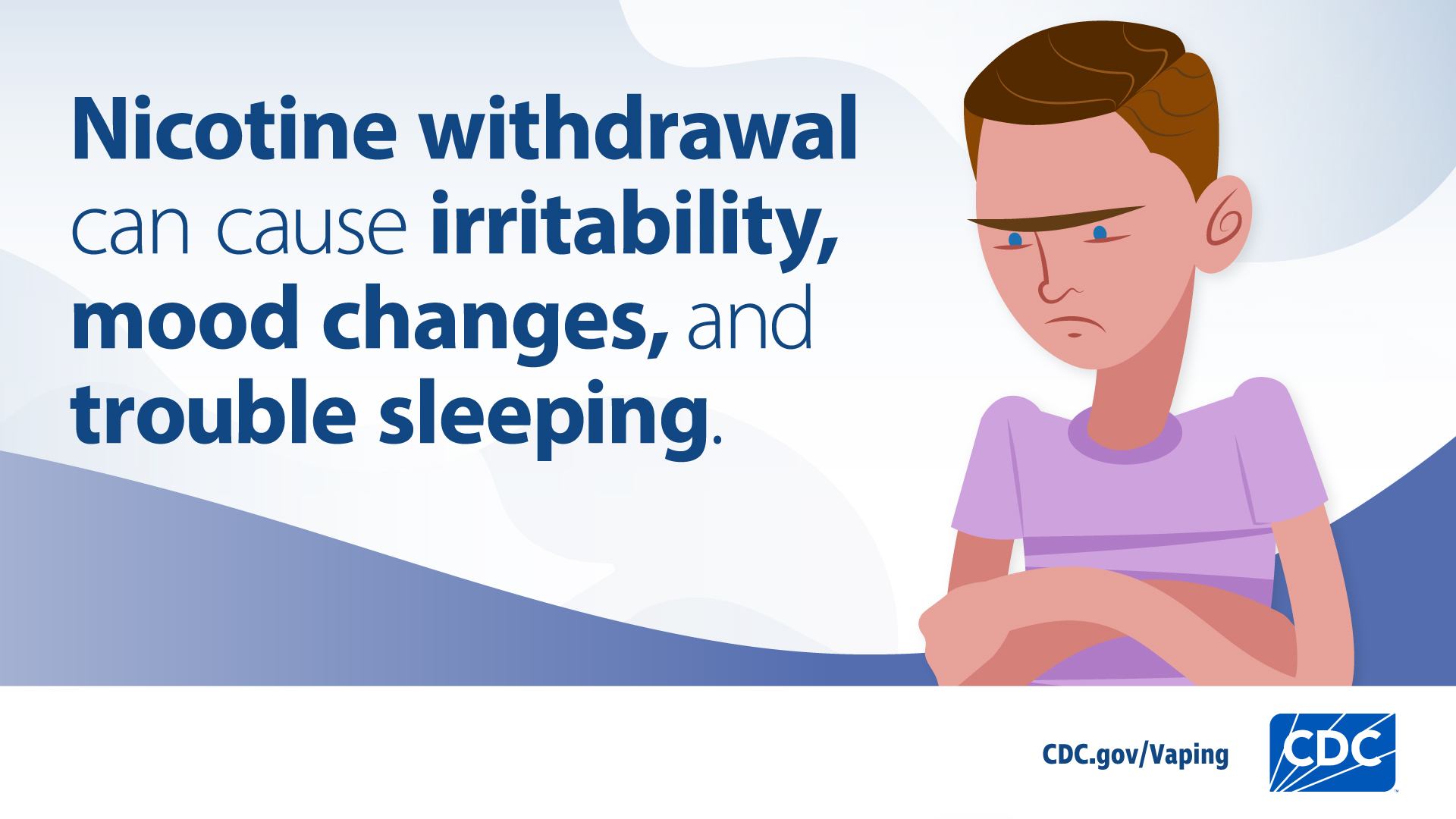
When someone addicted to nicotine stops using it, their body and brain have to adjust. This can result in temporary symptoms of nicotine withdrawal which may include:
- Feeling irritable, jumpy, restless, or anxious
- Feeling sad or down
- Having trouble sleeping
- Having a hard time concentrating
- Feeling hungry
- Craving nicotine
Withdrawal symptoms fade over time as the brain gets used to not having nicotine.
Nicotine addiction and mental health
Nicotine addiction can harm mental health and be a source of stress.21222324 More research is needed to understand the connection between vaping and mental health, but studies show people who quit smoking cigarettes experience:25
- Lower levels of anxiety, depression, and stress
- Improved positive mood and quality of life
Mental health is a growing concern among youth.2627 Youth vaping and cigarette use are associated with mental health symptoms such as depression.2228
The most common reason middle and high school students give for currently using e-cigarettes is, “I am feeling anxious, stressed, or depressed.”29 Nicotine addiction or withdrawal can contribute to these feelings or make them worse. Youth may use tobacco products to relieve their symptoms, which can lead to a cycle of nicotine addiction.
WATCH THE FULL VIDEO
Video is ready to play. If one link doesn't work, try another available link below 👇

