It happens to all of us — you buy fresh produce and stick it in the refrigerator only to find it a few weeks later looking shriveled and rotten.
To avoid throwing it out, it’s important to know where to store fruits and vegetables and which foods to keep separate from one another. Some fruits give off ethylene gas, which can make other produce ripen and rot faster.
These storage tips will help keep your fruit and vegetable purchases fresher longer so you get your money’s worth.
General storage tips — Some produce can be stored in the refrigerator at 40 degrees Fahrenheit or below or on the counter. Refrigerate all produce that is purchased pre-cut or peeled.
FRUIT
- Apples — Apples produce ethylene gas, so store them away from other produce. They can be stored on the counter for up to a week or in the fridge for more than a week.
- Avocados — Ripen on the counter, then store in the refrigerator.
- Bananas — Keep green bananas out of the refrigerator and let them ripen on the counter or a banana hanger.
- Berries — Blueberries, blackberries, strawberries and raspberries are delicate and should not be washed until ready to eat. Keep in the refrigerator in dry, covered containers.
- Cherries and grapes — Store in the refrigerator, unwashed, in their packaged plastic containers or plastic bags until ready to wash and eat.
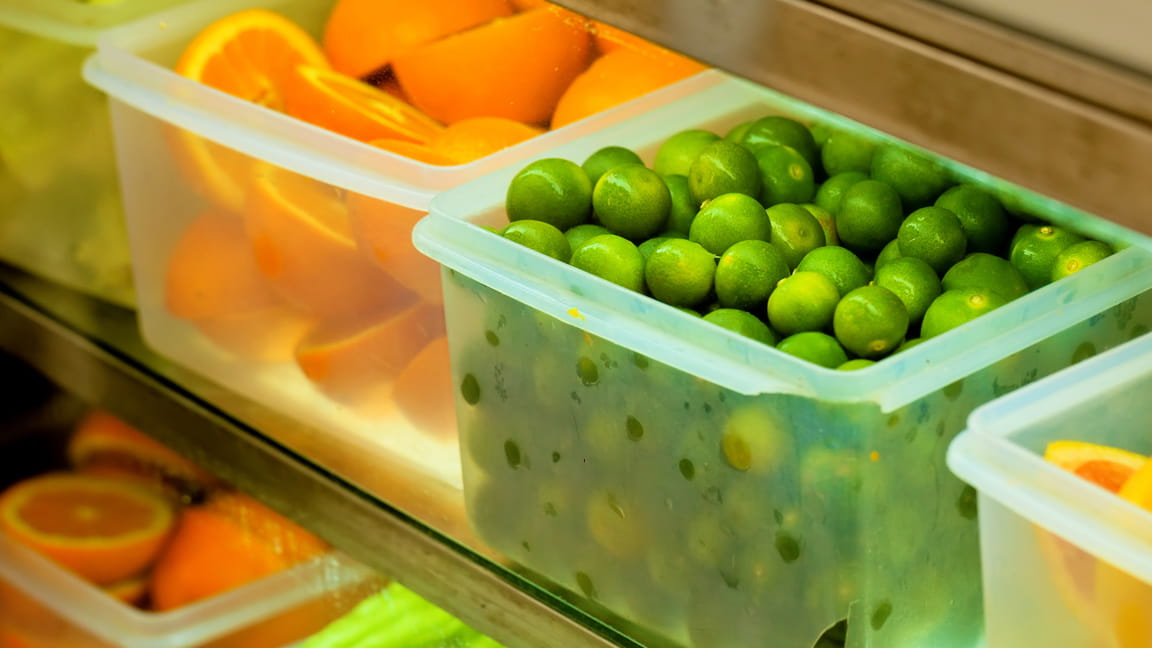
- Citrus fruit — Extend the shelf life of clementines, grapefruit, lemons, limes and oranges by storing them in the crisper drawer or in a mesh bag in the refrigerator. They can be left at room temperature for a week.
- Melons — Store cantaloupe and honeydew loose in the refrigerator, even before they’re cut. Watermelon can be kept in a dark, dry place away from other produce. Keep cut melon in the fridge.
- Stone fruit — Keep nectarines, peaches and plums in a paper bag on the counter until they are ripe, then move them to the refrigerator where they’ll last a few more days.
- Tomatoes — Store at room temperature and they can last for one to two weeks. Keep loose in a bowl away from the sun.
VEGETABLES
- Broccoli and cauliflower — Broccoli and cauliflower are ethylene-sensitive and are best kept in separate refrigerator drawers or a sealed container away from other ethylene-producing produce.
- Celery — Store in the refrigerator, remove from plastic bag and wrap in aluminum foil.
- Corn — Store in the refrigerator inside their husks.
- Cucumbers — Store in the refrigerator and do not wash until ready to eat. When stored away from ethylene producers, they can last one to two weeks.
- Eggplant — Store at room temperature for up to two days or in the refrigerator for up to seven days.
- Green beans — Store in the refrigerator, unwashed in a breathable bag.
- Leafy green vegetables — Greens such as lettuce, collards, chard, kale and spinach should be stored loosely in the refrigerator.
- Onion family — Store garlic and onions in a cool, dark and dry space but separate from ethylene producers such as potatoes.
- Mushrooms — Keep unwashed in the refrigerator. Moisture makes them slimy.
- Peppers – Store whole peppers in low humidity drawer for up to seven days. Cut peppers should be stored in an airtight container in the refrigerator for three days.
- Root vegetables – Store carrots, beets and radishes in the refrigerator. Store potatoes, sweet potatoes and winter squashes in a cool, dark and dry place such as a pantry or cellar.
WATCH THE FULL VIDEO
Video is ready to play. If one link doesn't work, try another available link below 👇
▶ PLAY VIDEO
🎥 VIDEO LINK 1
🎬 VIDEO LINK 2