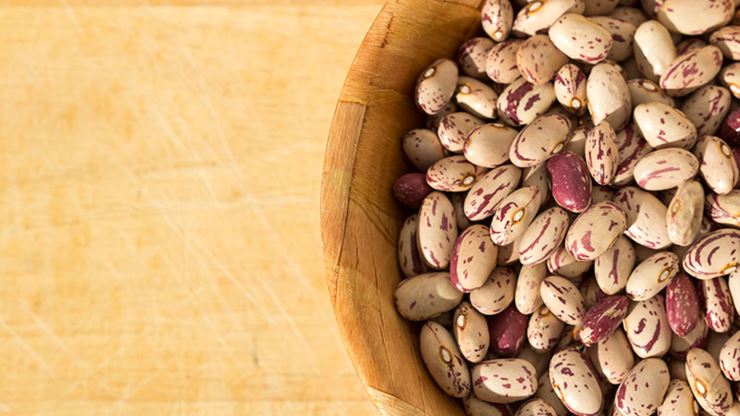
Dried beans are an affordable pantry staple. They expand when cooked, so you get more for less. One pound (2 cups) of dried beans makes about 6 cups of cooked beans, the equivalent of a little more than 4 cans of canned beans.
- Rinse dried beans in a colander and check them for any impurities, such as leaves, stones or twigs.
- Soak your beans. There are three common methods of soaking beans. The traditional and quick soak methods are on most packaging instructions. If you buy in bulk and have no instructions on hand, it’s good to know all three.
Soaking has two major benefits: It reduces the cooking time, and it breaks down the compounds in beans that cause flatulence. The longer beans soak, the more the gas-producing compounds break down. Depending on which soaking method you use, your beans could triple in size, so it’s important to use a large enough pot when soaking beans.
- Traditional soak — Place beans in a large pot, cover beans with cold water and soak overnight.
- Quick soak — Place beans in a large pot and cover using 6 cups of water for every 2 cups of beans. Bring to a boil for 2-3 minutes. Remove from heat and let sit for one hour.
- Hot soak — Place beans in a large pot and cover with 10 cups of water for every 2 cups of beans. Boil for 2-3 minutes. Remove from heat and let sit for 4-24 hours.
- Drain beans in a colander, rinse with cold water and put in a heavy pot of a size appropriate to the amount of beans you’re making.
- Add water to cover beans by at least 2 inches. Bring to a boil over high heat, skimming off the foam that rises to the top.
- Reduce heat and simmer, covered, for about 2 hours. Check occasionally and add more water if necessary. (If the water level is too low, the beans on the top of the pot will not cook as well as the ones on the bottom.)
Cooking times can vary according to the type and age of the beans. To test for doneness, eat a bean and see if it’s soft to your liking.
If you are cooking beans for soups, you will want them to be tender but not too soft. If you are cooking beans for hummus, you want them to be rather soft.
WATCH THE FULL VIDEO
Video is ready to play. If one link doesn't work, try another available link below 👇